
Fanatic · Tooting enquiries
Curtain Cleaning Tooting
A hem mark or ring after spot treatment can affect the decorative face and lining differently. For Tooting curtain enquiries, describe both layers and the history of the concern before choosing another product or taking the pair down.
Fabric and lining checks
Access and handling agreed
Shrinkage risks considered
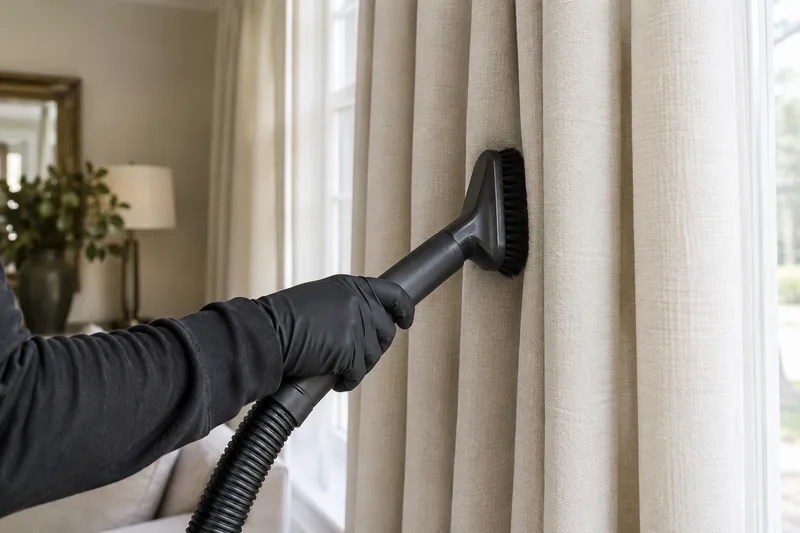
Show the lower edge in the whole curtain
Provide a view of the complete drop, then locate the mark at the hem, side or fold. Explain any floor contact, spill or moisture history you know. A close-up may show the boundary but not whether it crosses the decorative face, backing or a seam attaching different materials.
Give the approximate dimensions and number of pieces, with a care label where available. The curtain service guide explains construction assessment. Identify several pairs separately so their linings and concerns are not confused merely because they share one room or window style.
Describe what spot treatment changed
List sprays, detergents or a previous wash, and note whether a pale ring, stiffness or distortion appeared afterwards. Say when the area dried and whether the visible edge returned. Avoid interpreting a temporary improvement while damp as proof that another identical treatment will solve the concern permanently.
Show the lining and mention interlining, special backing or uncertainty about layers. Weakened fabric, faded edges and loose stitching are distinct from removable residue and may remain afterwards. Do not pull at a fragile hem to investigate it; describe the condition and let suitable handling account for the complete construction.
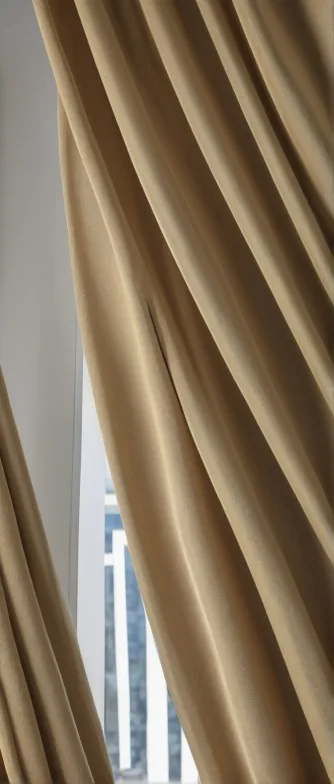
Consider dust removal and compatible treatment together
Gentle removal of accessible dry dust can prepare the textile, but any further approach needs to suit its face and attached layers. Handling and moisture should reflect the lining as well as the visible cloth. A robust outer fabric does not establish that every layer tolerates the same wet process.
Ask what benefit is realistic for the mark and previous treatment history. Colour loss, shrinkage or a physically damaged seam cannot be promised away through cleaning. Do not choose a household wash simply because the curtain can be unhooked; the assessment needs to consider whether the whole pair can respond appropriately.
Agree how fittings and room access will be managed
Describe the rail height and attachment from a safe position and state whether the curtains remain hanging. Ask about appropriate handling before taking them down, with any removal, transport or rehanging responsibilities expressly agreed. Avoid an improvised ladder or heavy lifting to prepare an uncertain arrangement.
Give the Tooting entry details and route to the room. Clear small ornaments and identify furniture blocking the window. Seating can be included through Tooting upholstery care, and fitted flooring through carpet cleaning, with separate material information and accepted scope rather than automatic inclusion in curtain work.
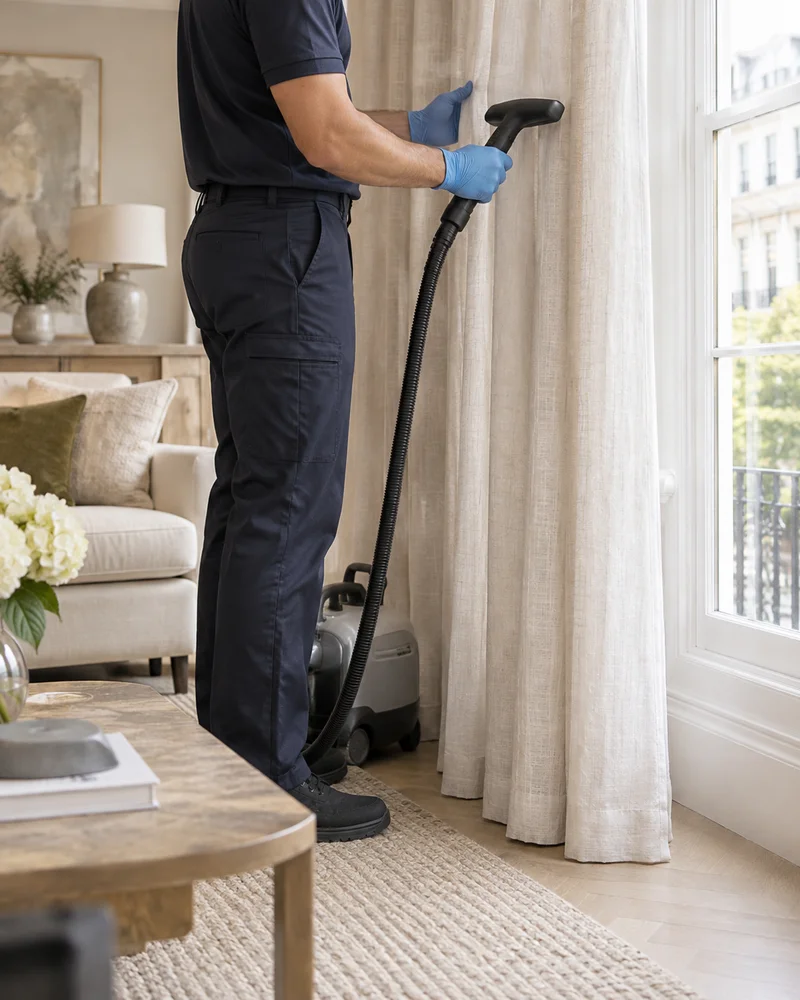
Turn dimensions and layers into a clear total
The broad curtain estimate published on the site does not set a fixed unit price for every pair. Supply the count, width, drop and known lining details, then ask for a quotation identifying the proposed treatment and handling. Include the concern history so it belongs within the assessment rather than appearing only on arrival.
Consult the price guide and confirm the actual total before booking. No additional fees are added above the agreed quotation. Clarify which pairs and practical arrangements are accepted, especially when a request involves unlike textiles or uncertain fitting responsibilities across more than one room.
Review the mark only after appropriate readiness
Ask how the layers should be positioned and when the pair can return to normal use under the selected approach. The lining and face may retain moisture differently, so a quick touch at one edge is not a universal test. Avoid enclosing damp folds or applying excessive heat to force a timetable.
Once ready, compare the original concern under similar light and note when any boundary returns. Report the observation before adding another product to the layered textile. Suitable routine dust care should then follow its instructions and existing condition, while permanent colour or construction changes remain separate from the cleaning benefit.
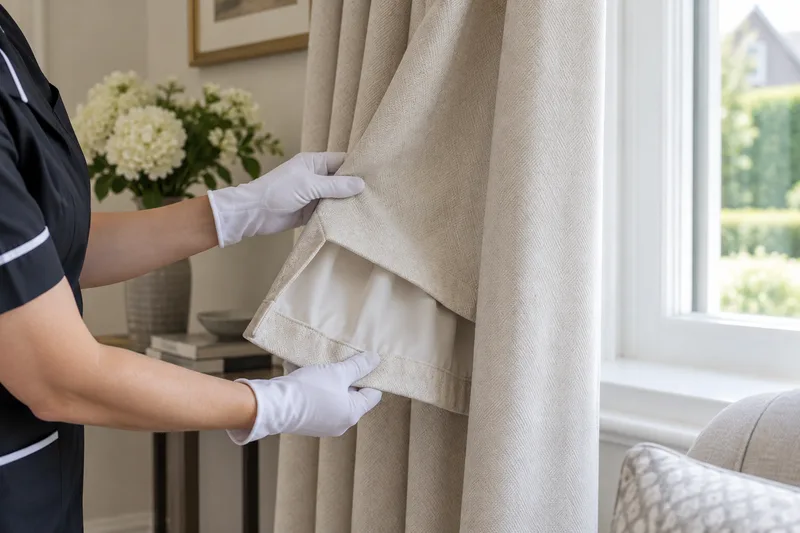
A Tooting curtain condition quotation
| Item or area | Guide from | Published range |
|---|---|---|
| Published general curtain estimate; unit not specified | £30 | £30–£100 |
| Lined, tall or delicate curtains | Quote | Dimensions and handling required |
Published estimates, not a confirmed Tooting tariff. Agree the total and scope before booking. No additional fees are added to the agreed quotation.
Questions about hem rings and previous products
Can a ring affect the lining as well as the face?
It may, depending on the spill and previous moisture. Show both layers and explain their treatment history; assessing only the decorative surface can miss information relevant to suitable handling and realistic expectations.
Should an affected hem be scrubbed again?
Avoid another unassessed application or aggressive rubbing. Product history, construction and existing damage matter, and a new attempt can alter the concern before it is assessed without guaranteeing a better outcome.
Does a mark mean the pair must come down?
Not automatically. Describe the fitting and textile first, then confirm an appropriate handling arrangement. Removal and rehanging responsibilities need agreement rather than being inferred from a request for curtain cleaning.
Are extra fees added for Tooting curtains?
No fees are added above the agreed quotation. Confirm piece count, dimensions, layered construction and practical handling before accepting the total so the proposed scope is clearly recorded.
Other items in the same Tooting enquiry
For a different address, see Curtain Cleaning Balham or Curtain Cleaning Wimbledon. Confirm the property details and the scope for that enquiry.
Show the Tooting curtain mark across its layers
Provide the full pair, affected hem and lining with any label or product history. Add fitting details so the quotation can describe suitable care and agreed handling without relying on assumptions about the textile.