
Fanatic Carpet Cleaning · London
Professional Carpet Cleaning London
Embedded soil needs more than a quick pass with a vacuum. We assess the fibre, backing and stains before choosing how to clean your fitted carpet, with drying and access planned around the room.
Fibre-led assessment
Extraction or low-moisture care
Clear room-by-room quote
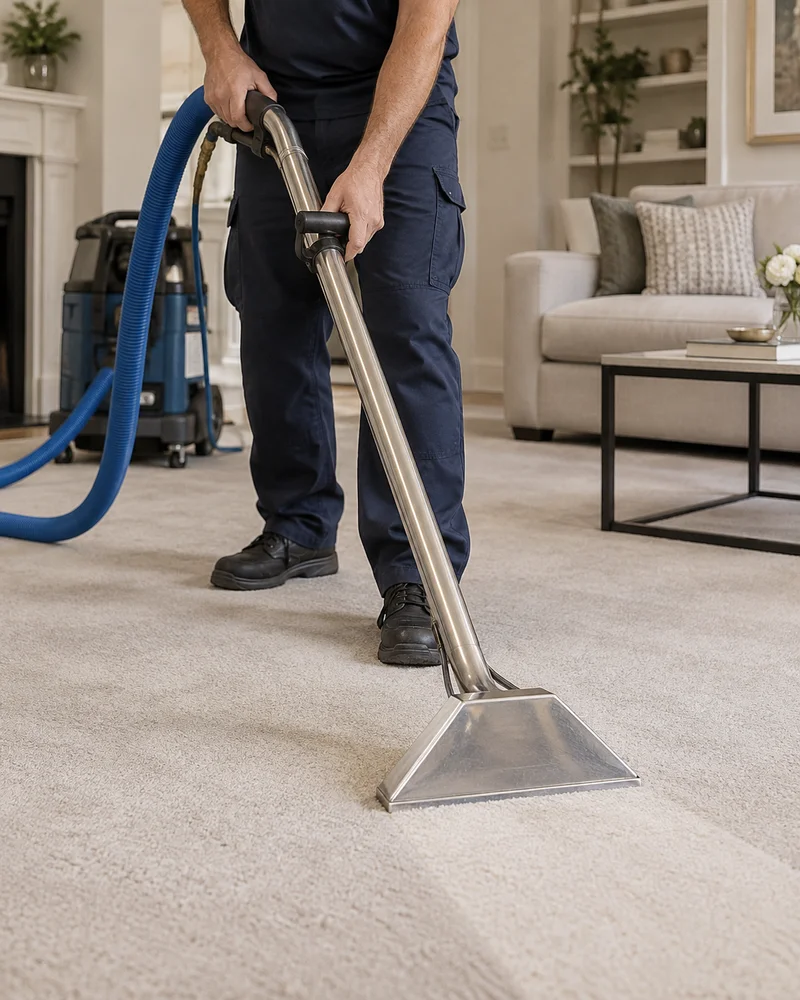
A proper clean starts beneath the surface
A fitted carpet collects more than the marks you can see. Fine grit works down into the pile, while oils from everyday use make busy walkways look darker than the edges. Vacuuming is essential, but it cannot remove every residue that has attached itself to the fibres. Professional cleaning addresses that build-up with a method selected for the carpet rather than a single treatment used everywhere.
Tell us which rooms need attention and what has happened in them. A recently spilled drink, a recurring pet accident and general traffic soil need different decisions. Describe any treatments you have already tried, especially bleach, household stain removers or hired-machine detergents. Knowing that history helps avoid mixing incompatible products and gives a more realistic assessment of the likely result.
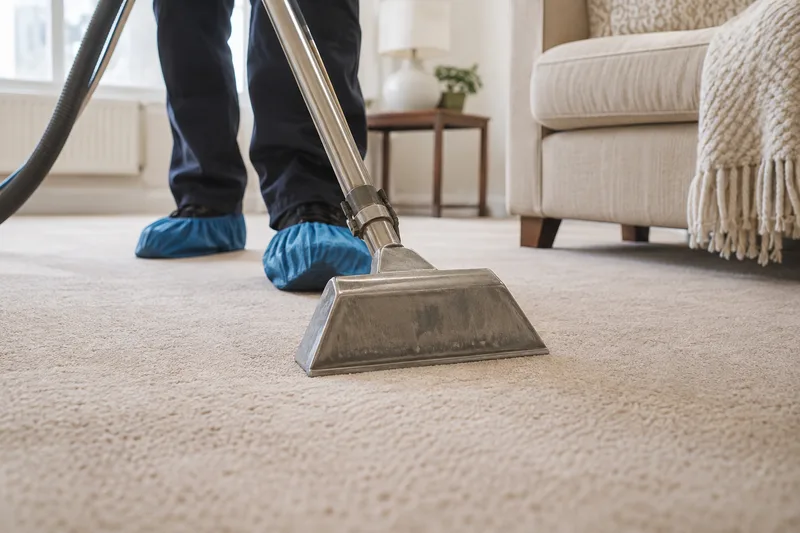
Wool, synthetic pile and the backing underneath
The visible pile is only part of the construction. Fibre blends, backing, seams and the way a carpet is fitted all affect how it responds to moisture and cleaning. Wool needs appropriate chemistry and careful moisture control. Synthetic carpets can still suffer from heat damage, permanent dye changes or a weakened backing. A hard-wearing appearance does not make a carpet immune to damage.
Care labels and installer information are useful, particularly for expensive or unusual carpets. Point out loose seams, rippling, discolouration and any area that has been wet before. Natural plant fibres such as sisal and seagrass need an individual suitability check; do not assume a water-based treatment will be appropriate. A separate loose rug also needs its own inspection, so arrange rug cleaning rather than treating it as another patch of fitted carpet.
Hot water extraction and lower-moisture cleaning
Fanatic’s published service describes hot water extraction and dry, lower-moisture cleaning. Extraction applies a suitable cleaning solution and recovers it with the dissolved soil through a suction wand. It is often called steam cleaning, although that phrase does not mean every carpet is cleaned with a jet of steam. The important decisions are solution choice, moisture, recovery and suitability for the construction.
A lower-moisture approach may be considered where the carpet or working conditions call for it. Neither method is automatically the best option for every room. Ask which products and equipment are proposed for your carpet. If you have fragrance sensitivities or product concerns, raise them before the visit so the intended treatment can be discussed.
Making room for the work
Remove small objects, toys, cables and fragile items from the areas you want cleaned. Explain which furniture is staying in place and which pieces you want moved; heavy units, valuable furniture and electrical equipment need an agreed plan. A room price should not leave you guessing whether the area under the bed or behind a large cabinet is included.
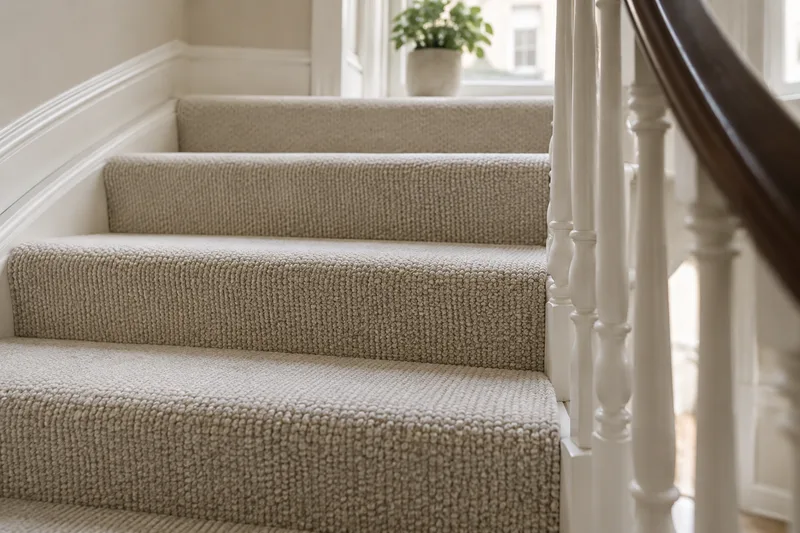
Give us the floor level, lift details and any restrictions on parking or entry. If equipment must be carried up several flights, that affects the practical arrangements. Keep children and pets away from the active work area and identify a route that avoids damp carpet afterwards. For rented properties, confirm the required rooms with the landlord or agent rather than assuming a clean includes repairs or restoration.
What happens during the visit
The assessment covers the carpet’s condition, visible spots and the scope agreed when booking. Dry soil is removed as appropriate before targeted treatment and the selected main cleaning method. A stain should be considered individually instead of repeatedly saturating the whole room to chase one mark. Moisture-sensitive edges, adjoining flooring and furniture bases need care throughout the work.
At the end, review the accessible areas and ask which marks remain. You should receive practical drying and use advice based on the carpet and room conditions. Dark traffic lanes can include fibre wear as well as removable soil, so some shading may remain even when the carpet has been cleaned. Cleaning changes the soil level; it cannot rebuild a flattened or damaged pile.
Spills, pet marks and realistic limits
Tea, coffee, food, tracked-in dirt and many household spills can be assessed for treatment. Prompt attention usually makes the history easier to understand, but no sensible service can guarantee every stain will disappear. Bleach removes colour from the fibre; it is not ordinary dirt. Burns, worn pile and previous dye damage need a different solution from cleaning.
Pet contamination may extend below the visible surface into the backing or underlay. Surface treatment alone may not resolve an odour when its source sits underneath the carpet. Tell us where accidents occurred and whether the smell returns in humid conditions. Avoid masking the area with repeated fragrance sprays before inspection. Where upholstery is affected too, include sofa and upholstery cleaning in the discussion so each material gets a suitable approach.
Planning the price and the return to the room
Measure rooms approximately and list stairs, landings and hallways separately. The published room-size ranges below are a guide, not a fixed booking tariff. Fibre type, condition, access, furniture arrangements and additional treatments can change the quotation. Ask for the complete total, included treatments and VAT before accepting the booking. No additional fees are added above the agreed quotation. A small stain is not necessarily a small job once access and treatment are considered.
Drying depends on recovered moisture, pile depth, temperature, ventilation and humidity. Do not arrange an event on the assumption that every carpet will dry in an exact number of hours. Leave suitable airflow and follow the advice given on site. Keep furniture off damp areas unless appropriate protection is in place, and avoid bringing outside soil onto freshly cleaned pile.
Care between professional visits
Use a vacuum suited to the carpet and the maker’s instructions, with extra attention to entrances and walkways. Clean entrance mats help reduce the grit carried indoors. Blot a fresh spill with a plain absorbent cloth instead of scrubbing it aggressively. Test any approved spot product in an unobtrusive place and avoid adding several different products to the same mark.
For a workplace, schedules and carpet tiles need a different plan from a spare bedroom; our office carpet cleaning page explains that approach. For transparent planning across rooms and furniture, see the cleaning price guide. Before arranging the visit, check London coverage and give us your postcode. Availability is confirmed for the booking, not implied by an area name on a list.
Carpet Cleaning price guide
| Cleaning area | Guide from | Published range |
|---|---|---|
| Small room, up to 10 m² | £30 | £30–£50 |
| Medium room, 10–20 m² | £50 | £50–£80 |
| Large room, 20–30 m² | £80 | £80–£120 |
| Stairs or hallway | £25 | £25–£45 |
Published ranges are a guide. Confirm the included work, complete total and VAT before booking; material, size, condition and access inform your quote. No additional fees are added above the agreed quotation. See the full price guide.
A clear plan for your carpet
Room sizes, stair access and furniture movement make a carpet quotation useful. Discuss those details with Fanatic, alongside fibre suitability and drying, so the scope matches the fitted flooring you actually want cleaned.
Questions about carpet cleaning
Can cleaning remove flattened traffic lanes?
It can remove accumulated soil, but it cannot rebuild worn fibres. A cleaner surface may still show permanent pile distortion or shading in the routes used most often.
Do I need to know my carpet’s fibre type?
No. A label, receipt or installer information helps, but suitability still needs checking. Tell us if the carpet is wool, a natural plant fibre or an unusual blend.
Does steam cleaning mean boiling steam is used?
The term is commonly used for hot water extraction. The actual process and settings should be selected for the carpet; do not assume every material receives the same heat or moisture.
Will you clean beneath heavy furniture?
Agree furniture movement and the accessible floor area when booking. Do not assume fitted wardrobes, large cabinets or valuable items will be moved as part of a room price.
Can I book just a staircase?
Ask for a quotation describing the number of steps, landings and access. The published staircase range is indicative. Agree the complete staircase quotation before booking; no additional fees are added above it.
Why does a stain return after the surface dries?
Material held deeper in the backing can move towards the surface during drying. Tell us about previous saturation and recurring stains so the source can be assessed.
When can I put furniture back?
Follow the drying advice for your room. Avoid placing unprotected furniture legs onto damp carpet, as contact can transfer colour or leave marks.
Do you issue a tenancy cleaning certificate?
Confirm any receipt or documentation you need before booking. Carpet cleaning does not itself guarantee acceptance by a landlord or agent.
Related cleaning services
Talk through your carpet cleaning needs
Discuss the material, access and the result you need before arranging a visit.
District appointment guides
Fulham · Wimbledon · Clapham · Ealing · Wandsworth · Chelsea · Kensington · South Kensington · Notting Hill · Holland Park · Hammersmith · Chiswick · Shepherd’s Bush · Acton · Brentford · Richmond · Twickenham · Putney · Barnes · Battersea · Balham · Tooting · Streatham · Dulwich · Peckham · Brixton · Camberwell · Bermondsey · Greenwich · Canary Wharf · Stratford · Hackney · Islington · Highbury · Finsbury Park · Camden · Kentish Town · Hampstead · Belsize Park · Highgate · Muswell Hill · Finchley · Golders Green · Marylebone · Westminster
Browse Areas We Cover for all seven services in each selected London district.